
Traffic Court Records in Minnesota
District Court hears every traffic matter in Minnesota. Routine citations never pass through a separate municipal tier. A ticket written inside city limits still enters the county District Court file. Some citations can simply be paid without a first appearance. Others require you to show up, and the citation itself plus any later notice sets that path. The County District Court Administrator keeps the file and answers case-specific questions.
A brand-new ticket takes time to process. It may not show up as a court case immediately. The number on the ticket is a citation number; the court file number comes later, after filing. MCRO accepts either one when you search a Minnesota traffic matter. The docket then tracks citations, hearings, pleas, orders, and financial events, all apart from the driver licensing record. Your notice controls whether an initial appearance is required.
Minnesota Citation and Court File Numbers
The citation number and the Minnesota court file number are two different things. Most Minnesota citation numbers run twelve digits. Hennepin and Ramsey parking tickets break that pattern. Once a ticket reaches District Court, the file number usually combines a two-digit county code, a case-type prefix, a two-digit year, and a sequence. Some locations toss in extra characters. Type the number exactly as printed. Never try to build one from a pattern.
The type prefix hints at what kind of court file is opening. It tells you nothing about the case itself. CR usually marks criminal or mandatory-appearance matters; VB marks certain payable violations with no required appearance. Don't post someone else's real citation or case number as a sample. And with a fresh ticket, a court file number may not exist yet.
- Citation number
- The identifier assigned to the Minnesota traffic citation; enter it in Minnesota Court Records Online’s Citation Number search.
- Court file number
- The Minnesota District Court number assigned to a filed case; it may be entered with or without hyphens or leading zeroes and without spaces.
- CR and VB
- Common Minnesota case-type prefixes for criminal or mandatory-appearance cases and certain payable violations. Confirm the classification in the live file.
Note: Use the exact identifier printed on the Minnesota notice; the common number pattern has exceptions.
Statewide Citation and License-Hold Systems
Several statewide services touch a Minnesota traffic ticket, and each does its own job. MCRO handles court case and citation lookup. The Court Payment Center takes eligible fines. Driver and Vehicle Services keeps the driver-license record. For the official Minnesota file and any case-specific appearance question, the county court administrator remains the contact.
| System | What It Holds | Run By |
|---|---|---|
| MCRO Citation Number Search | Public District Court citation and case register, plus available public documents | Minnesota Judicial Branch |
| Court Payment Center | Eligible fine balance and payment processing, not a full docket history | Minnesota Judicial Branch |
| County District Court Administration | Official county citation file, appearance information, record copies, and certification | Minnesota Judicial Branch court administration |
| Statewide license-hold lookup | No separate Minnesota OmniBase-style citation or license-hold search was identified in the official sources reviewed | No standalone program identified |
| DVS driver record | Driver license and related licensing record, separate from the court docket | Minnesota Department of Public Safety, Driver and Vehicle Services |
Unpaid citations do not automatically become license holds under Minnesota law and court reporting rules. The outcome and any licensing action depend on the citation, the offense, the court report, and the law that applies. Split the work: MCRO for the court event, the Court Payment Center for an eligible fine, DVS for the license question.
Search a Minnesota Traffic Citation by Number
Minnesota Court Records Online puts a Citation Number search tab inside its District Court Case Search form. Pick that method and enter the full citation exactly as issued. The statewide search covers every county court location. It costs nothing, and it needs no login. The live form may also offer optional fields like date of birth, filing date, case category, status, and court location. A result can open the Register of Actions and public documents when those are posted online.
The Judicial Branch's Minnesota citation and court-file number information page explains both identifiers. It also covers how each is used.
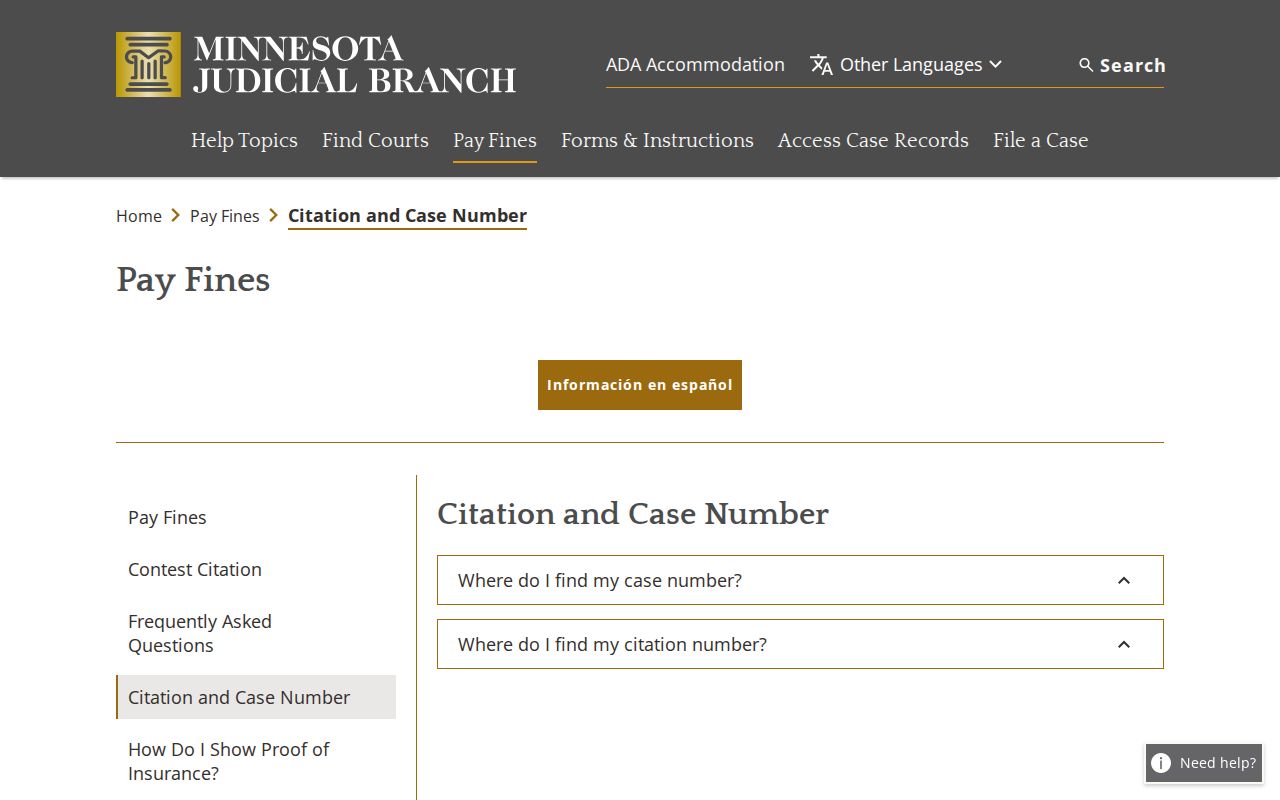
Processing a Minnesota citation can take up to about seven days, so an early search may come back empty. Pending criminal, traffic, and petty-misdemeanor matters without a conviction never appear in defendant-name search. Use the citation or court file number instead as the alternate route.
How to Look Up a Minnesota Traffic Ticket
Keep the ticket and any later notices together. The Minnesota citation number locates a case once processed, and the county venue points to the right court office. Then:
- Read the Minnesota citation for its number, issuing agency, court or county, and whether it says the matter is payable or requires an appearance.
- Allow the court system time to process a new Minnesota citation. The Judicial Branch advises that this can take up to about seven days in common workflows.
- Search Minnesota MCRO Case Search using Citation Number. If a court file number is already shown, use that number to open the Register of Actions.
- Read the newest Minnesota hearing notice or order for the date, response instructions, and appearance method. For a court date, follow the steps in the Minnesota Court Calendar reference.
- If the citation is absent, the date is unclear, or a copy is needed, contact the county District Court Administrator. The Minnesota county directory routes to the county court layer, including for city-issued tickets.
For a Minnesota city-issued ticket, the county venue identifies both the court file and the hearing contact.
Note: Processing time is not a deadline extension; follow the response date printed on the Minnesota citation.
Minnesota Payment Search Is Not a Docket
The Minnesota Court Payment Center (CPC) handles eligible fine and payment questions. It is not a public case search, and it does not set a contested hearing. Current Minnesota instructions allow up to seven days of processing. Only then can CPC help with a new citation. If your ticket does not turn up, double-check the number and contact the Minnesota court or payment center.
The Minnesota Judicial Branch payment instructions explain the payment path and what paying a payable citation means.
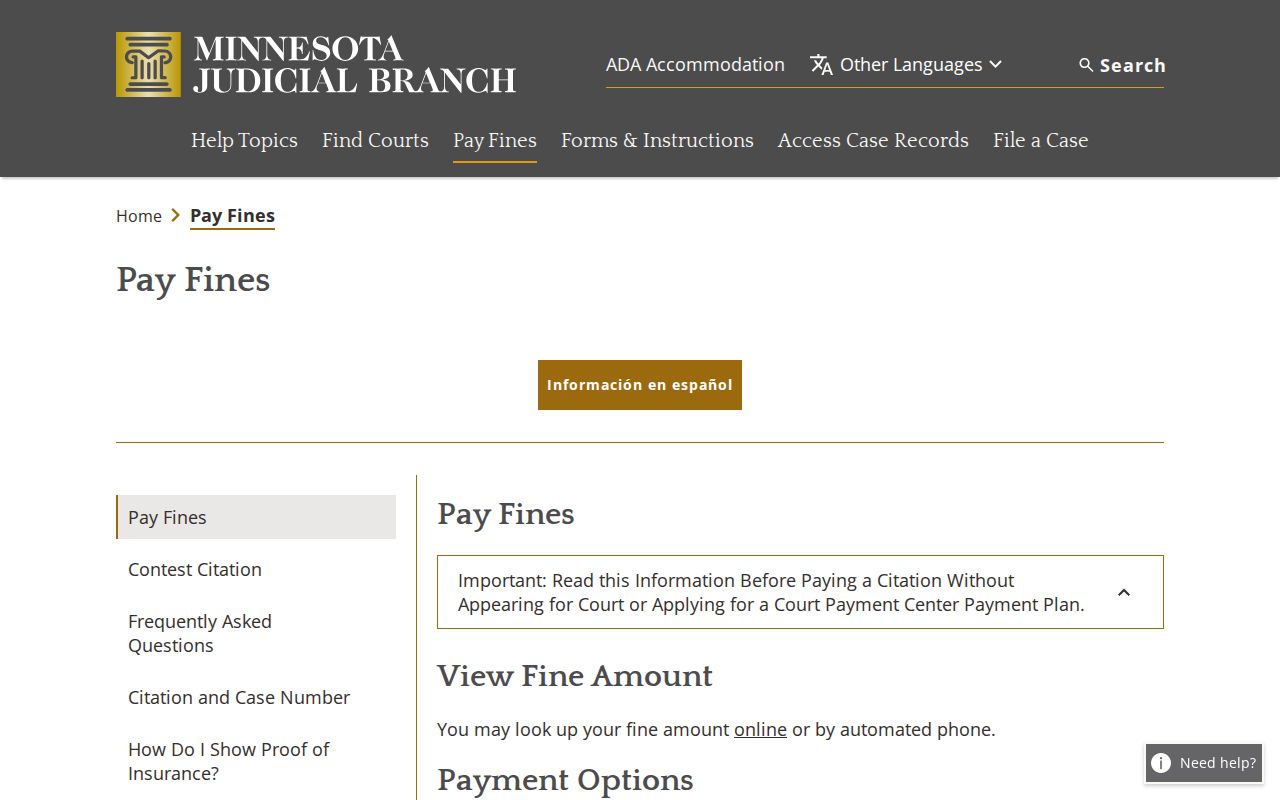
The Court Payment Center reports an eligible Minnesota balance and takes payment, while the MCRO Register of Actions holds the actual court event history. For a contested citation, follow the court appearance instructions rather than treating a payment search as a docket or calendar lookup.
Paying or Contesting a Ticket in Minnesota
A payable Minnesota traffic ticket gives you two roads. Pay it, or show up in court and fight it. Read the citation closely before choosing either one. The Minnesota Judicial Branch treats payment as a guilty plea that waives your right to a trial. Anyone who wants to contest the ticket should schedule that court appearance first. Do it before any money changes hands.
| Question | Paying a Payable Citation | Contesting or Requesting an Appearance |
|---|---|---|
| Effect | Payment enters a guilty plea and may result in conviction and a fine. | An appearance lets the person respond to the citation and discuss available case resolutions. |
| Timing | Many notices allow payment or an appearance request within 30 days from filing; follow the individual notice. | Schedule by the notice deadline and before making payment if challenging a conviction. |
| Where | Use the Court Payment Center or the payment method named on the citation. | Use the court or appearance process named on the citation; ask county administration about the assigned date. |
If You Miss a Minnesota Traffic Court Date: The Minnesota court warns that a warrant may issue and late penalties may apply; failure to appear is treated as a guilty plea for certain offenses, subject to exceptions. Minn. Stat. §171.16 limits license suspension based solely on unpaid traffic fines in covered cases, but it addresses reported failures to appear separately. Contact the issuing court promptly and confirm any licensing status with DVS.
Note: The deadline on your citation notice is the one that counts. The court describes a 30-day period, but that window does not fit every case.
Minnesota’s Camera Pilot Has Narrow Rules
Minnesota's Traffic Safety Camera System is a statutory pilot. It is not a statewide camera docket open to any city. The law authorizes it from August 1, 2025 through July 31, 2029, and only in three places: Minneapolis, Mendota Heights, and MnDOT trunk-highway work zones under set conditions. Red-light and speeding camera citations still flow into the court system. The case number and notice govern how the file opens and how you respond.
The fines are modest but real. A red-light camera offense carries a $40 fine under the pilot statutes. A speed-camera offense carries $40 or $80 when the alleged speed was at least 20 miles per hour over the limit. The first qualifying offense earns only a warning. A second can be diverted through a traffic-safety course. Commercial vehicles and some commercial-license holders face exceptions. The program and its limits sit in Minn. Stat. §169.147, §169.14, and §169.06.
Remember that the warning and diversion rules belong to this pilot alone. Check the current implementation pages for active locations and camera types. Then follow whatever the citation notice tells you to do.
Court Traffic Record vs Driver Record
Minnesota keeps two separate files that people often confuse. The County District Court Administrator holds the traffic case file. That file is the court docket for the ticket. The Department of Public Safety's Driver and Vehicle Services (DVS) holds the driver-license record instead. A Minnesota court may report qualifying outcomes to DPS. But the docket update and the agency's processing are two distinct steps on two timelines. So a court docket search never replaces the licensing record. A DVS record is not a second court docket.
| Court Traffic Record | Driver Record | |
|---|---|---|
| Custodian | County District Court Administrator and Minnesota Judicial Branch | Minnesota DPS Driver and Vehicle Services |
| Contents | Citation, notices, pleas, orders, findings, judgments, payments, and court events | Driver credential, license status, and the licensing agency’s driver record |
| Search or request | Use MCRO by citation or case number; ask Minnesota court administration for an official copy. | Use DVS service or record channels for the agency-held driver file. |
The Minnesota Driver and Vehicle Services page identifies the state licensing agency’s service path.
That split still matters after a Minnesota ticket is resolved. The court register shows the judicial events, while DVS reflects what it has received and processed under licensing law.
Note: A later court report and an agency update may not show up in both Minnesota records at the same time.
Minnesota County Court Holds the Citation File
A Minnesota citation may be missing from MCRO or the payment system. Double-check the number and give it time to process. The county District Court Administrator is the office to call for the file, an appearance date, a copy, or a certification. Payment questions go to CPC; licensing status goes to DVS. Each office holds different records.
City-issued Minnesota tickets also route through county District Court administration. The Minnesota county directory lists the local court contact. Courthouse public terminals provide access to public case information under the access rules that apply. For counter hours, payment methods, and appearance instructions, check the page for your county.